When you are an international student on a student visa in Australia, a sudden illness or injury is the last thing you want to face. The moment you realise you need urgent care, a critical question surfaces: should you head straight to the nearest public hospital emergency department, or is a private emergency clinic a better option? The choice matters because it affects how long you wait, what you pay upfront, and how much of that bill your Overseas Student Health Cover (OSHC) will reimburse. This article explains how to choose between public and private emergency rooms as an international student and breaks down the OSHC reimbursement rules that determine your out‑of‑pocket costs in 2026.
Understanding Public and Private Emergency Care in Australia
Australia runs a mixed healthcare system. Public hospitals provide emergency treatment under Medicare for Australian residents, while private hospitals and private emergency centres charge fees for faster access and more personalised environments. As an international student, you are generally not covered by Medicare; instead, your OSHC policy acts as your primary health insurance. That policy, usually from providers like Allianz Care, Bupa, Medibank, or nib, follows rules set by the Department of Health. These rules require OSHC to cover medically necessary emergency treatment, but the definitions of “medically necessary” and the caps on payments can leave you with a gap to pay.
A public hospital emergency department (ED) is designed to assess and stabilise anyone who arrives. Triage nurses prioritise patients by clinical urgency, not by insurance status. Because of this, public EDs see high volumes, and wait times for non‑life‑threatening conditions can stretch to several hours. Private emergency centres, often attached to private hospitals, tend to offer shorter waits and more one‑on‑one attention, but they come with out‑of‑pocket fees that may only be partially covered by OSHC.
When to Choose a Public Hospital Emergency Room
If you face a genuine medical emergency—severe bleeding, difficulty breathing, suspected heart attack or stroke, major trauma, loss of consciousness, or a sudden and intense allergic reaction—the public ED is the safest first choice. Public EDs are equipped with full resuscitation teams, on‑site operating theatres, and intensive care units. They operate 24/7 and must treat you even if you do not have your OSHC membership card at hand. In these life‑threatening situations, the question of cost should be secondary, because OSHC is required by law to pay at least the equivalent of the Medicare Benefits Schedule (MBS) fee for emergency treatment provided in a public hospital. This means your out‑of‑pocket may be limited to the excess on your policy, if you have one, and a possible co‑payment for overnight stays that owe to public hospital bed charges.

For less acute but still urgent problems—suspected fractures, deep cuts needing stitches, persistent high fever, or severe pain that cannot wait until a GP appointment—a public ED remains a reliable option, but you are likely to face a long wait. If your condition is stable, you might instead consider a nearby urgent care clinic that bulk‑bills OSHC or charges a known fee, but that is not always available late at night. In most Australian cities, public hospital EDs are located in major teaching hospitals, giving students access to specialists and diagnostic imaging on site. International students who are unfamiliar with the system often default to the public ED simply because it is the best‑known path. That instinct is correct when symptoms are severe, but for moderate complaints, a private emergency centre may offer a better overall experience.
When to Choose a Private Emergency Department
Private emergency centres have become more common in Australian capital cities. They often operate during extended hours, some until midnight, and they promote minimal wait times and direct specialist access. For an international student, the biggest draws are speed and convenience. If you have a painful ear infection that flared up on a Friday night, a deep wound that needs urgent suturing but is not life‑threatening, or a sports injury like a suspected torn ligament, a private emergency facility can see you quickly, treat you, and send you home without the overnight wait of a public ED.
However, the financial aspect requires careful attention. Private emergency centres do not have the same obligation to charge only MBS rates. They set their own facility fees, consultation fees, and procedure charges, and these can be significantly higher than the OSHC‑covered amount. Most OSHC policies will contribute by reimbursing a portion of the bill—typically the MBS fee for the treatment item—and leave you with the difference. For example, a private emergency consultation might be billed at $300, while the MBS fee for an equivalent service is $135. Your OSHC policy may reimburse $135, and you must cover the remaining $165. If the visit includes procedures, pathology, or scans, the gap can be larger. Always ask for an estimate before you consent to treatment when the situation allows, or ask a friend to call the insurer’s helpline while you are being seen.
How OSHC Covers Emergency Visits: Rules and Limits
OSHC coverage for emergency care is shaped by three main rules: the treatment must be medically necessary, there is usually a per‑item MBS benchmark, and most policies include an annual limit and an excess. Here is what that means in practice.
- Medically necessary treatment: Any service that a reasonable medical practitioner recognises as essential to diagnose or stabilise your condition qualifies. Routine check‑ups, cosmetic procedures, or non‑urgent second opinions are not emergency treatment and may not be covered at all.
- MBS fee benchmark: OSHC policies are built to pay at least the MBS fee for out‑of‑hospital services and for in‑hospital medical services when you are a private patient in a public hospital. If a private emergency centre charges above the MBS rate, you pay the gap. If you attend a public ED as a public patient, OSHC pays the state health authority the established rate for overseas visitors, which typically covers the full accommodation and treatment costs except a potential excess.
- Policy excess and annual limits: Check your certificate. Many international student policies have a $500 excess per claim or per year. If you have not paid the excess, your first emergency visit may involve a significant out‑of‑pocket that is not reimbursed. Additionally, there may be annual sub‑limits for ancillary services like ambulance transport or allied health.
- Ambulance: What often catches students by surprise is ambulance costs. OSHC covers emergency ambulance services when they are medically necessary, but only up to a stated cap, such as $5,000 per year in some policies. If you need an air ambulance or long‑distance inter‑hospital transfer, the cost can exceed that cap, so confirm with your provider.
Always keep your OSHC membership number and the insurer’s emergency contact line saved in your phone. Providers often have 24/7 help desks that can advise on the nearest directly billing facility, potentially reducing or eliminating upfront payment.
Step‑by‑Step: What to Do in an Emergency as an International Student
When an emergency hits, it is easy to freeze. Use a simple five‑step plan:
- Assess severity: If there is a threat to life, limb, or sight, call 000 immediately and request an ambulance. Do not drive yourself.
- Call your OSHC helpline (if stable): For non‑life‑threatening situations, dial the insurer’s 24/7 number and explain your symptoms. The representative can guide you to a nearby public ED, a private emergency centre that direct‑bills, or a bulk‑billing urgent care clinic.
- Prepare your documents: Have your passport, student visa grant notification (or digital visa evidence), OSHC membership card or app, and a payment method ready.
- At the facility: Tell the triage nurse clearly how you feel and mention any medications, allergies, or pre‑existing conditions. If you choose a private emergency centre, ask what the facility fee is and whether they can provide a written quote for the expected OSHC rebate gap.
- After treatment: Keep all invoices, discharge summaries, and receipts. Lodge a claim through your OSHC provider’s app or portal as soon as possible. If you paid upfront, the reimbursement usually takes five to ten business days.
Common Billing Scenarios and Real‑World Gaps
Understanding real numbers helps. Consider these scenarios in 2026:
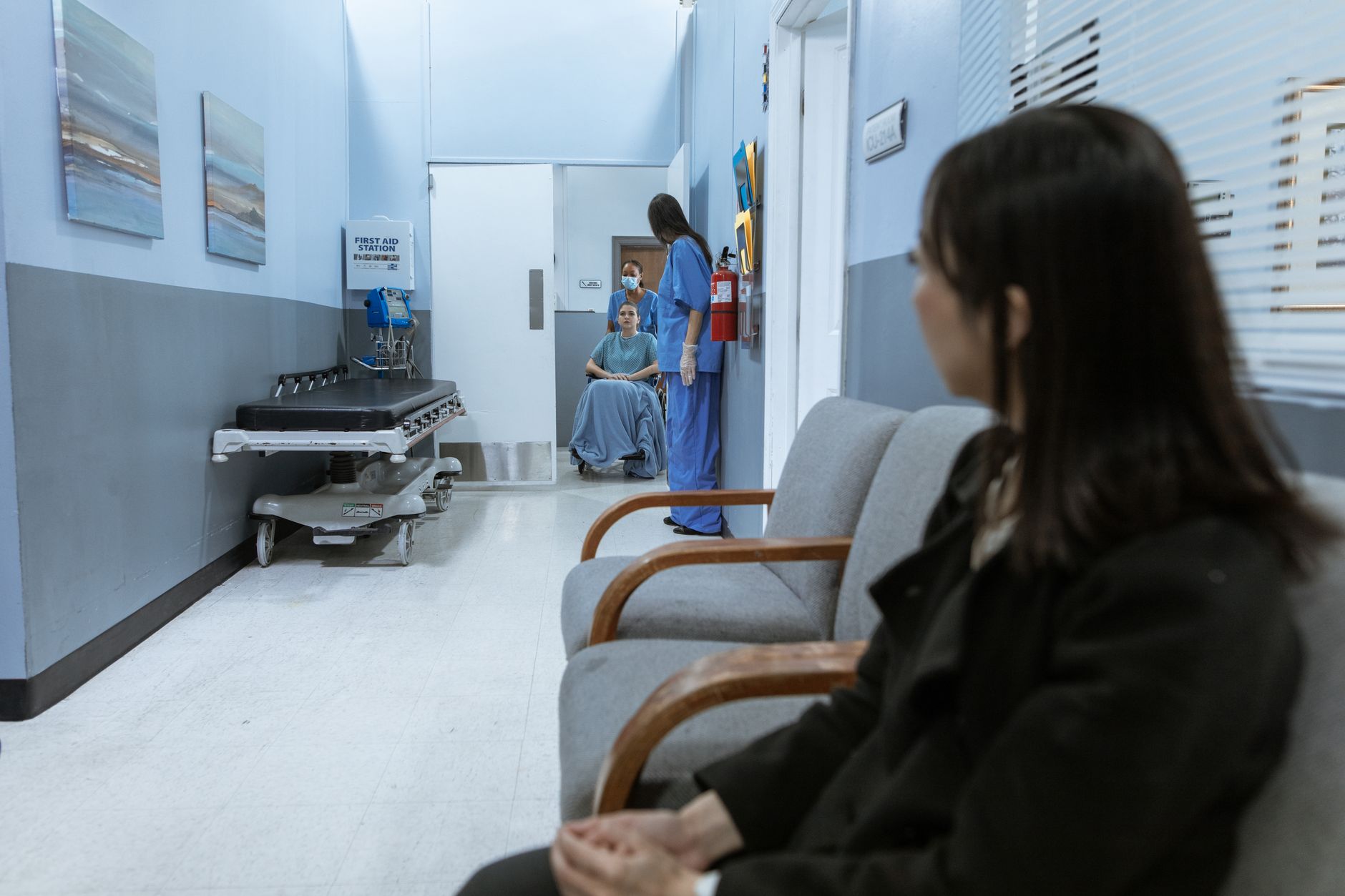
- Scenario A – Public ED for a broken wrist: Miguel falls off his skateboard and suspects a fracture. He goes to a public hospital ED. He is treated as a public patient, no private room request. OSHC covers the full ED and inpatient costs (minus any policy excess). If he has a $250 excess, he pays $250; everything else is borne by the insurer and the state health system.
- Scenario B – Private emergency centre for a deep cut: Priya cuts her hand while cooking. It is late evening and the nearest public ED wait is estimated at four hours. She visits a private emergency centre. The consultation fee is $320, suturing and dressings add $280, total $600. Her OSHC policy reimburses $180 (MBS equivalent). Priya pays the remaining $420 out of pocket.
- Scenario C – Ambulance then public ED for asthma attack: Lee has a severe asthma attack and calls 000. Ambulance paramedics treat him and take him to a public ED. The ambulance fee is $1,200, covered in full by OSHC under the ambulance benefit. The ED and overnight admission are fully covered, but Lee later sees a $500 excess on his annual claim. Net cost: $500.
These examples highlight why the public‑private decision matters. Public EDs minimise surprise billing, while private centres trade convenience for a higher personal cost.
FAQ
1. Does OSHC cover all emergency room visits in Australia? OSHC covers medically necessary emergency treatment. If you visit a public hospital ED as a public patient, the costs are typically covered in full (apart from any excess). Private emergency visits are partially covered up to MBS rates, and you pay the gap.
2. Can I go to a private emergency department and expect full OSHC reimbursement? No. Private emergency centres charge facility and consultation fees above the MBS schedule. OSHC only reimburses the MBS component. You will almost always have an out‑of‑pocket cost unless the facility direct‑bills at MBS rates, which is rare.
3. Is ambulance transport included in OSHC? Yes, medically necessary emergency ambulance services are covered, but most policies have an annual cap (commonly $5,000). Always check your specific policy wording for inter‑hospital transfers or air ambulance limits.
4. What if I cannot afford the upfront cost at a private emergency facility? If you are stable, you can transfer to a public hospital ED where you will not need to pay upfront as a public patient. Some private centres may allow you to pay a deposit and claim the rest later, but there is no obligation for them to do so. Call your OSHC provider’s emergency line for guidance.
5. How do I claim a reimbursement after an emergency visit? Submit the invoice, receipt, and a completed claim form via your OSHC app or website. If you were admitted to hospital, the hospital may bill your insurer directly. Keep copies of everything, and follow up if payment is not received within two weeks.
Making the Right Call When It Counts
Choosing between a public hospital emergency department and a private emergency centre comes down to a rapid trade‑off between clinical urgency and financial exposure. For life‑threatening symptoms, the public ED is the gold standard and offers the most comprehensive OSHC coverage. For moderate, time‑sensitive problems, a private emergency clinic can save you hours of waiting but at a price that OSHC will not fully cover. By understanding the OSHC reimbursement rules before an emergency strikes, you position yourself to make a well‑informed decision, reduce stress, and avoid surprise invoices when your focus should be on recovery. Save your insurer’s number, know your policy excess, and always ask about expected gaps when you have the chance—these small acts can turn a frightening experience into one where you are firmly in control.